30 May, 2026
Saturday
BLOG
Is AI Making Me a Better Person — or Making Me Crazy?
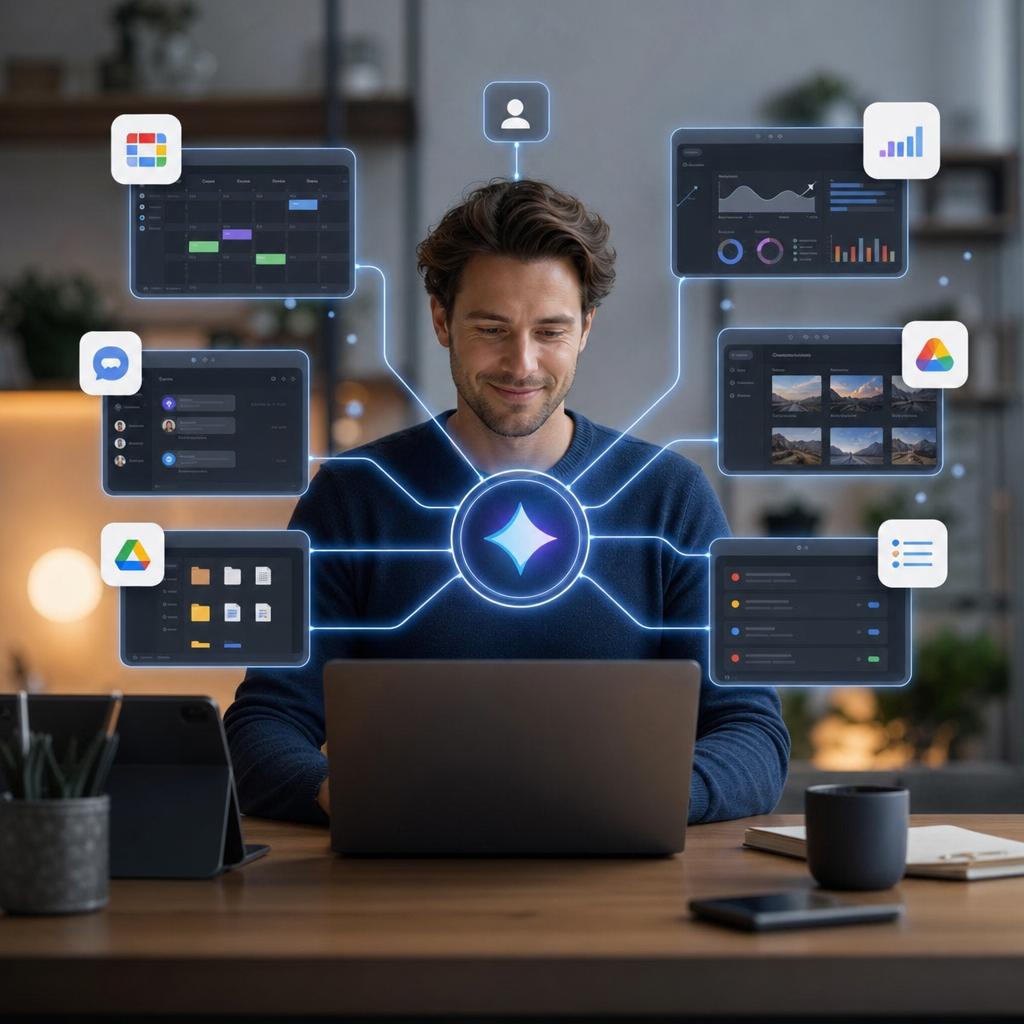
Over the last year, AI has changed the way I think, the way I work, and, in many ways, the way I live. What started as a tool to help me ask better questions and get faster answers has become something much bigger. AI has not just improved my productivity. It has changed the structure of my thinking.
The more I have used AI, the more I have found myself becoming analytical about everything. I now spend more time stepping back, planning, and justifying the work I am about to do before I invest large amounts of time into it. In business, this has been incredibly powerful. It has helped me avoid weak ideas, solve bigger problems, and bring much more clarity to projects that might otherwise have wasted time, money, and energy.
But there is another side to this story.
AI has changed the way I approach problems
Before using AI so heavily, many questions in life and business were left sitting in my mind for too long. The process of exploring an idea often felt slower, less structured, and more difficult to break down. AI changed that.
Now, the first question is only the beginning. One answer leads to a deeper question, then another, and another. Instead of stopping at the surface, I now walk through problems in layers. I challenge assumptions more. I test ideas more. I look for weaknesses earlier. I think more strategically.
This has improved the quality of my decisions. It has made me more focused, more informed, and, in many ways, more effective.
The unexpected personal cost
What I did not fully expect was how much this new way of thinking would spill over into the rest of my life.
I have noticed that I do not only use this analytical process when I am sitting in front of AI. I now apply it automatically in everyday life. In my personal relationships, in my business relationships, and in the way I communicate with staff and other people, I can see the effect clearly.
AI has trained me to think in steps, frameworks, logic, and outcomes. That has helped me become sharper, but it has also changed the way I relate to people. Sometimes real human relationships do not work in neat frameworks. They require patience, emotion, time, presence, and understanding that cannot always be reduced to a process.
That is where I have started asking myself a difficult question: has my deep involvement with AI improved my life overall, or has it also taken something from me?
Has AI affected my relationships?
This year, as a single person, I cannot help but ask whether my obsession with AI has played a role.
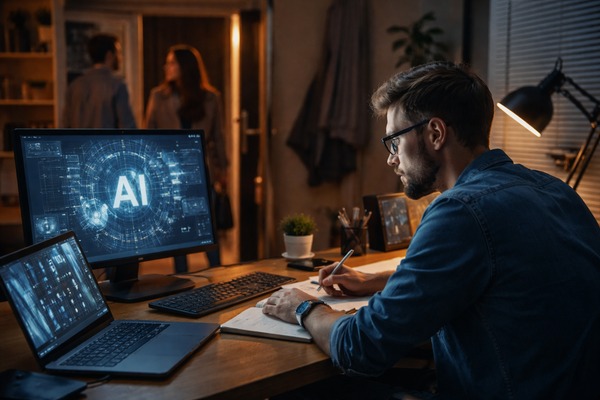
Looking back honestly, I believe one reason for the collapse of a relationship I had over the last five years was my own neglect. The relationship ended suddenly when the other person left without warning, and that experience forced me to reflect on how I had been living. I believe that the huge learning curve involved in deeply using AI, including tools like ChatGPT, OpenClaw, and other AI systems, pulled more and more of my attention away from the people around me.
I became intensely focused on learning as much as possible, improving myself, improving my business, and understanding new systems at a very high level. In many ways that focus helped me grow, but I now believe it also came at a serious personal cost. I was so consumed by study, experimentation, and constant problem-solving that I failed to give enough time, energy, and care to my relationship and to some of the friends around me.
I suddenly found myself starting 2026 single and feeling very alone. Now, months later, I can say with more honesty that this was most likely not just bad luck or bad timing. It was, at least in part, the result of my neglect of the people around me while I was trying so hard to study, learn, and improve myself.
I have spent huge amounts of time, days, nights, and long stretches of focus, learning AI and using it to overhaul my business, improve communication, restructure systems, and create better outcomes across many parts of my work. In that sense, AI has been transformational.
But time is limited.
When so much time and energy is being pushed into work, learning, systems, and problem-solving, something else often gives way. For me, I can see that my social life has suffered. I have gone out less. I have travelled less. I have been more antisocial. I have not maintained some relationships with the care and consistency that I believe human relationships deserve.
That is not because AI told me to damage my relationships. It is because AI is built to keep moving forward. It helps solve the next problem, then the next one, then the next. If I let it, it can keep me in a permanent cycle of productivity.
AI does not understand human limits
This is one of the biggest lessons I have learned.
AI is incredibly powerful at helping us think, plan, organise, write, research, and improve. But AI does not truly understand what it means to be human. It does not feel exhaustion. It does not need sleep. It does not suffer burnout. It does not understand loneliness, emotional distance, or the silent damage that can happen when too much of life becomes work.
If we are not careful, AI can push us into a version of ourselves that is highly productive but personally unbalanced.
That is a dangerous trade-off.
Smarter in business, weaker in human connection?
I genuinely believe AI has made me better in many areas of life. It has made me more capable. It has made me more informed. It has helped me identify weaknesses in myself, in my business, and in the systems around me. It has helped me improve my communication, my marketing, my planning, and my ability to solve problems.
In many ways, I do feel smarter because of how much I have learned through using AI.
But intelligence in business is not the only measure of a good life.
What concerns me is that while I have improved in strategy, systems, and execution, I may also have neglected part of myself that is deeply human: social connection, emotional presence, and real-world relationships.
A bigger issue society will soon face
I do not think this is only my story. I think this will become a much bigger social issue over time.
Many of us are using AI to improve our businesses, our careers, our marketing, our software, our sales systems, and our communication. We are becoming more efficient and more capable at an extraordinary speed.
But are we also slowly moving further away from normal human interaction?
Are we becoming so focused on optimisation, productivity, and results that we are neglecting our partners, our friends, our families, and our own wellbeing?
I believe this is one of the most important questions of the AI era.
Final reflection
I love AI. I believe it is one of the most powerful tools ever created for learning, problem-solving, and personal growth. It has helped me in ways I could not have imagined a few years ago.
But I also believe there is a warning inside that success.
AI can improve our lives from one angle while quietly damaging them from another if we are not careful. It can make us better at work while making us worse at rest. It can make us stronger in business while leaving us weaker in relationships. It can help us build more while living less.
That is why I think we need to stay conscious of our human needs. We need sleep. We need time away from screens. We need friends. We need family. We need love, laughter, travel, conversation, and the kind of human connection that no machine can replace.
AI may be changing us, but it is still up to us to decide what parts of ourselves we are willing to lose in the process.
Recent News